
Edward the Seventh
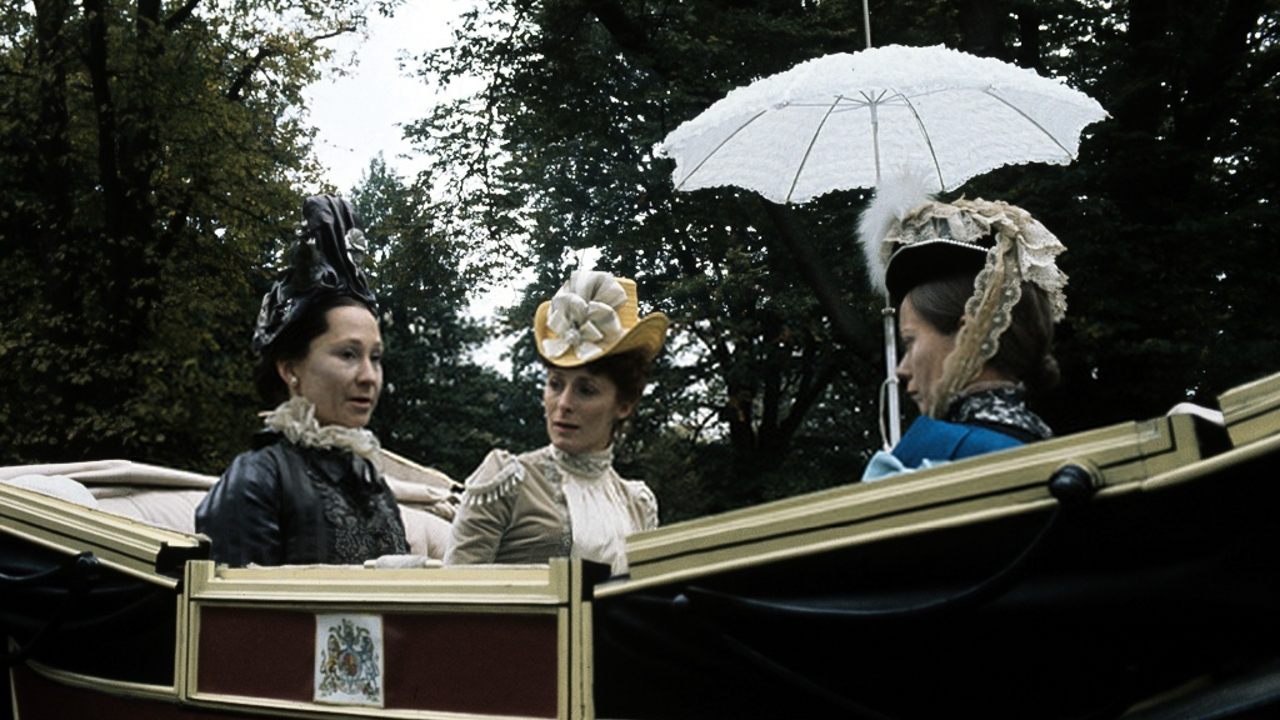
Edward the Seventh is a 1975 television drama miniseries produced by ATV. Based on the biography of Edward VII by Philip Magnus, the series features depictions of a vast number of historical figures including, but not limited to, Prince Albert of Saxe-Coburg and Gotha, Arthur Balfour, Arthur Wellesley, 1st Duke of Wellington, Edward VII, George V, Napoleon III, Nicholas II of Russia, Queen Victoria, Wilhelm I, Wilhelm II, Winston Churchill, Henry John Temple, and Otto von Bismarck.
Overview
Edward the Seventh is a 1975 television drama miniseries produced by ATV. Based on the biography of Edward VII by Philip Magnus, the series features depictions of a vast number of historical figures including, but not limited to, Prince Albert of Saxe-Coburg and Gotha, Arthur Balfour, Arthur Wellesley, 1st Duke of Wellington, Edward VII, George V, Napoleon III, Nicholas II of Russia, Queen Victoria, Wilhelm I, Wilhelm II, Winston Churchill, Henry John Temple, and Otto von Bismarck.
Cecil Clarke
Creator / EP
Lorna Mason
Producer
Episodes
1. The Boy
After only a year of marriage, Queen Victoria has not only given birth to a daughter but learns that she is again pregnant. The Queen takes her role seriously and is fully engaged in matters of State. She has an outstanding relationship with the Prime Minister, Lord Melbourne and is concerned that her confinement will limit her abilities to rule. For her husband, Prince Albert, his limited role in the household causes friction in the marriage. He has no say in the hiring of the household staff or the way his child is cared for. More importantly he yearns for a role as an adviser in the political realm. The Queen dearly loves him and over time, he slowly establishes himself as the head of the household and becomes an indispensable adviser. The birth of their second child, Prince Albert Edward, provides the line with a male heir. Even though he's only still a baby, his father is already planning his education.
2. An Experiment in Education
The young Prince Albert, called Bertie by members of the family, is not having a particularly happy childhood. The elder Prince Albert has very definite views about his son's education including the need for non-stop work, both in the classroom and out, and very strict discipline. Bertie rebels but the only solution seems to be ever more discipline. He's clearly a disappointment to his father who had hoped his son would be a new kind of leader, a scholar who knows and understands the world but that is clearly not to be, at least not to his satisfaction. He soon dismisses his eldest son and spends most of his time ensuring the happiness of his eldest daughter Princess Victoria, known as Vicky. Her marriage is something of a sad time for the Queen and the Prince Consort as they miss her greatly and Bertie feels that he cannot replace his sister in their hearts. Bertie for his part wants to do something useful but his personal wants and desires seem to the furthest thing from his father's mind.
3. The New World
After a successful tour of President Buchanan's America, young Prince Bertie returns home to find that his parents do not see it as a personal success rather one that can be attributed to the monarchy in general. His father tells him he is to go to Oxford to continue his studies but will be under the care of a governor and will not be allowed to mix with other students. Bertie really wants to join the army but his father, at first, refuses, but eventually decides in his favor. He is made a Lieutenant Colonel in the Grenadier Guards and sent to Ireland to undergo his training. There he sees a few familiar faces and begins an affair with an Irish music hall performer. The situation in Italy creates a conflict for Albert with his relations in the Austrian court. Vicky's son Wilhelm is born with a damaged arm. States in the American South secede, raising the possibility of war. Victoria's mother, the Duchess of Kent, dies.