Simon Schama's Power of Art
Documentary series in which historian Simon Schama recounts the story of eight moments of high drama in the making of eight artistic masterpieces.
Overview
Documentary series in which historian Simon Schama recounts the story of eight moments of high drama in the making of eight artistic masterpieces.
Episodes

1. Caravaggio
Michelangelo Merisi left his birth town of Caravaggio in the north of Italy to study as an apprentice in nearby Milan. In 1593 he moved to Rome, impatient to use his talents on the biggest stage possible. Caravaggio's approach to painting was unconventional. He avoided the standard method of making copies of old sculptures and instead took the more direct approach of painting directly onto canvas without drawing first. He also used people from the street as his models. His dramatic painting was enhanced with intense and theatrical lighting. Caravaggio's fate was sealed when in 1606 he killed a man in a duel. He fled to Naples where he attempted to paint his way out of trouble, he became a Knight, but was then imprisoned in Malta and then finally he moved to Sicily. He was pardoned for murder in 1610, but he died of a fever attempting to return to Rome.

2. Bernini
Born in Naples, Bernini was an exceptional talent from an early age and went on to dominate the art world of 17th century Rome. His work epitomised the Baroque style and his sculpture, church interiors and exteriors and town planning could be seen everywhere. He was also a painter, playwright, costume and theatre designer. Bernini worked under successive Popes; Pope Gregory XV made him a knight and Pope Urban VIII took him as his best friend. He was revered in his time until a jealous rage caused him to have the face of his mistress slashed after discovering her romance with his brother. His reputation fell further after his bell towers for the Cathedral of St Peter's started cracking in 1641. He redeemed himself and kick started his career again with arguably his most famous work, The Ecstasy of St Theresa, in 1652.

3. Rembrandt
Born to a family of millers in Leiden, Rembrandt left university at 14 to pursue a career as an artist. The decision turned out to be a good one since after serving his apprenticeship in Amsterdam he was singled out by Constantijn Huygens, the most influential patron in Holland. In 1634 he married Saskia van Uylenburgh. In 1649, following Saskia's death from tuberculosis, Hendrickje Stoffels entered Rembrandt's household and six years later they had a son. Rembrandt's success in his early years was as a portrait painter to the rich denizens of Amsterdam at a time when the city was being transformed from a small nondescript port into the economic capital of the world. His historical and religious paintings also gave him wide acclaim. Despite being known as a portrait painter Rembrandt used his talent to push the boundaries of painting. This direction made him unpopular in the later years of his career as he shifted from being the talk of the town to becoming adrift in the Amsterdam art scene and criticised by his peers.
Cast & Crew
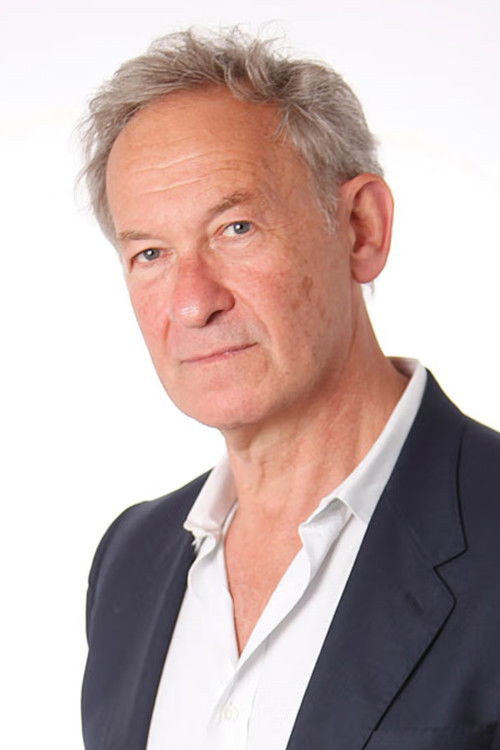
Simon Schama