
Tough Trains
World’s Toughest Train Rides is a documentary series that explores some of the most extreme and challenging railway journeys across the globe. Each episode features remarkable trains, facing harsh terrains, extreme weather conditions, and complex railway engineering. The series showcases the resilience of both the trains and the people who operate them. Along the way, viewers learn about the history, cultural significance, and technical ingenuity behind these extraordinary railways.
Overview
World’s Toughest Train Rides is a documentary series that explores some of the most extreme and challenging railway journeys across the globe. Each episode features remarkable trains, facing harsh terrains, extreme weather conditions, and complex railway engineering. The series showcases the resilience of both the trains and the people who operate them. Along the way, viewers learn about the history, cultural significance, and technical ingenuity behind these extraordinary railways.
Episodes

1. Across Bolivia: The Pantanal to the Pacific Coast
Since the 1860s, Bolivia has gradually lost land to its neighbors, becoming landlocked without access to coastal ports. In response, Chile and Brazil built railways connecting Bolivia to their coasts, but these routes have suffered from poor maintenance and underinvestment. The journey begins in Corumbá, Brazil, and follows the historic railway from Brazil to the Chilean coast. Along the way, Bolivia’s disconnected and underused rail networks are evident, isolating many communities. In Potosí, the railway remains vital for transporting minerals, and the route continues through the Uyuni Salt Flats to La Paz, where once-busy rail lines have been replaced by a cable car system. The journey ends at the Chilean coast, illustrating Bolivia’s ongoing struggle to maintain its essential rail connections.
2. India: Overcrowded and Unstoppable
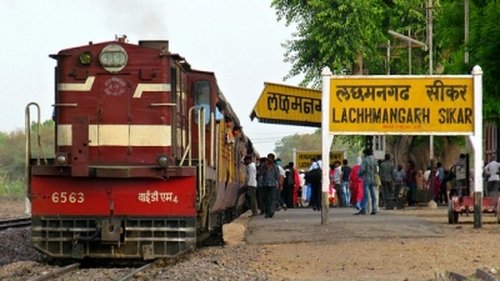
India’s vast railway network, built by the British in the 19th century, played a critical role in both colonial trade and the country’s fight for independence. Spanning 71,000 miles of track and connecting over 7,500 stations, the railways remain essential to India’s economy and everyday life. From overcrowded trains in the unbelievable heat to historic stations like Muzaffarpur and Lucknow, this journey reveals the challenges of train travel in India. Along the way, we uncover stories of resilience—from the Sepoy Rebellion and Gandhi’s anti-colonial campaign to the horrors of Partition and the increasing demand for women-only carriages. The adventure concludes with a ride on the Kangra Valley Railway, to the Himalayas.
3. Cuba's Sugar Trains
Cuba’s railway network, though dilapidated and unreliable, offers a fascinating journey through history. The country was one of the first to build a railway in 1837, primarily to transport sugarcane during its peak as the world’s largest sugar producer. The journey starts on the Hershey line, Cuba’s only electrified railway, built in the 1920s by an American chocolate company. Traveling from Havana to Santa Clara highlights the struggles of aging infrastructure and the impact of the U.S. embargo. In Santa Clara, visitors learn about the historical importance of the railways, especially during Che Guevara’s 1958 victory. A stop in Trinidad offers a ride on a sugar transport train, paired with rum cocktails. In Moron, mechanics maintain pre-Revolution locomotives despite limited parts. The adventure ends with a ride on a 1920s steam locomotive through sugarcane fields, showcasing Cuba’s railway legacy despite its challenges.