Trials of Life
Each of the twelve 50-minute episodes features a different aspect of the journey through life, from birth to adulthood and continuation of the species through reproduction.
Overview
Each of the twelve 50-minute episodes features a different aspect of the journey through life, from birth to adulthood and continuation of the species through reproduction.
Peter Jones
Creator / EP
Peter Jones
Producer
Episodes

1. Arriving
The first episode examines the various methods by which creatures come into the world. Attenborough’s opening statement alludes to the annual spawning of the Christmas Island red crab, of which there are estimated to be some 120 million. The exercise is all the more hazardous since the species is a land crab, and the eggs have to be deposited in the sea - where the most ancient animals on the planet still live and breed. One of the most prolific aquatic egg producers is the giant clam, but some land animals also lay vast quantities, and the mantis is one example. In the Western United States, Attenborough observes a wasp that digs a burrow, conceals it, and stocks it with fresh caterpillars for her emerging young. The grubs of another start life inside caterpillars, and eat the unsuspecting hosts. The problems of larger animals are illustrated by snow geese in the Arctic, which have to defend their eggs from arctic foxes. The process of embryonic growth inside the egg, from laying to hatching, is shown in detail. The malleefowl warms its eggs with rotting leaves, and Attenborough demonstrates the care with which it regulates them by adding sand to its mound - to have it kicked back in his face. The sea louse is a crustacean that commits suicide: its grubs consume so much of the mother’s energies that she dies after birth. Mammals shown giving birth to fully formed young include wildebeest, antelope, sea lions and chinchillas.
2. Growing Up
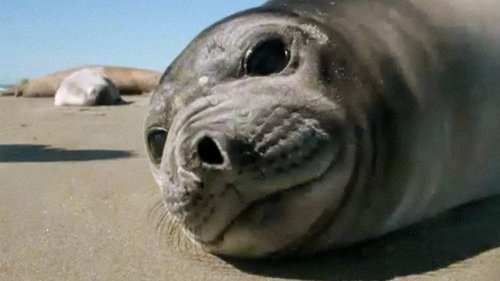
This programme describes the ways that various species care for their young. Attenborough defines childhood as achieving two tasks: growing and surviving. He highlights the elephant seal as an animal that experiences a compressed childhood, being abandoned after three weeks and left for up to another eight alone, while it becomes large enough to be able to swim. For terns, there is safety in numbers as the dense population works together to drive out marauding gulls. The snow geese in the Russian arctic show intense devotion as they escort their goslings by foot to the coast some 50 kilometres away. Scorpions carry their young on their backs, while a shrew will leave hers under a stone while she goes to feed. The eider duck is one creature that shares responsibility for its offspring: females regularly supervise the ducklings of others in a group. The mara is another that uses a crèche system, as does the bat, whose nurseries can be up to a million strong. The Florida scrub jay has developed complex parental relationships, using teams rather than pairs. Such behaviour is exhibited on a larger scale by elephants, where all females take an interest in raising a single calf. A chimpanzee’s childhood is socially complicated, as an individual must learn how to behave towards others, as well as master the use of tools. Albatrosses must be accomplished fliers as soon as possible - chicks are shown being hunted by tiger sharks.
3. Finding Food
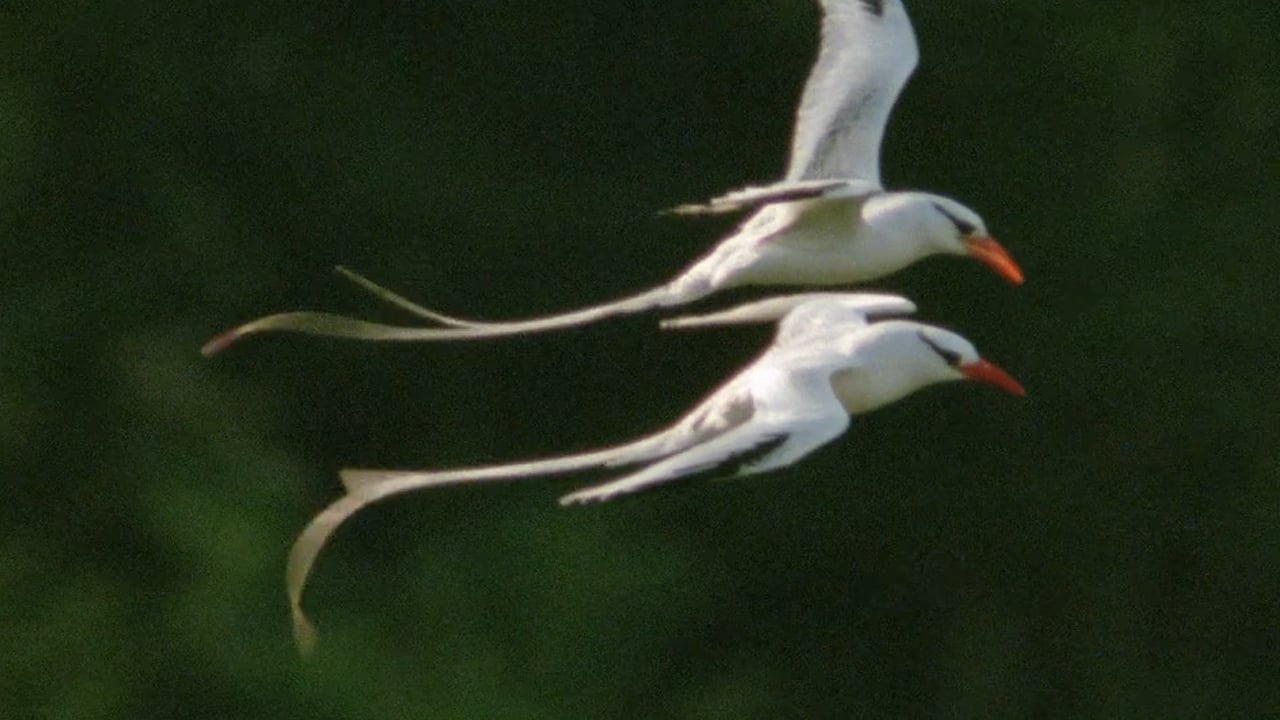
The next installment is devoted to the ways in which animals gather their sustenance. Attenborough begins in the South American rainforest, where the proliferation of animal and plant life does not necessarily make it easy to find food. Some leaves are poisonous, and so those that eat them have to be careful. Other plants use food (or nectar) as a bribe to get their pollen transported, and several species of hummingbird have developed exclusive relationships with certain of them. Fruit is also on offer, again as a means of reproduction, and creatures such as squirrel monkeys eat little else. Meanwhile, parrots and macaws take kaolin as an antidote to their diet of toxic seeds. Attenborough witnesses a 60,000 strong flock of knot and dunlin suddenly take advantage of a low tide to feed on tiny mud-dwelling molluscs. Barracuda hunt small fish, and drive shoals of them into bays to be eaten by pelicans, which are besieged by gulls that attempt to steal their catches. One species of gecko is able to differentiate between worker termites and the more dangerous soldiers. The web of the orb spider is hailed as one of the most elegant food catching devices, and the methods of two others, nephila and its kleptoparasite visitor, argyrodes, are explored in detail. Finally, tropicbirds, their crops full with food en route back to their nests, are ambushed in mid-air by a group of frigatebirds, whose aim is to make them surrender their cargo.
Cast & Crew
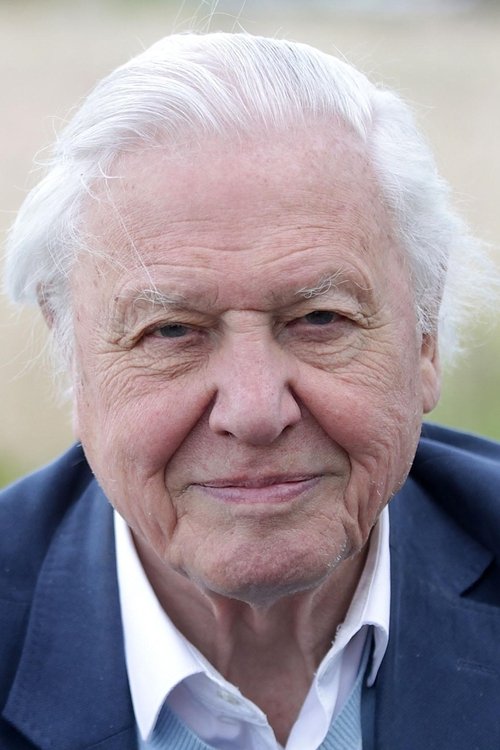
David Attenborough
Self - Narrator (voice)